
Tuesday, December 9, 2014
Doug's Vlog Episode 2: The Stuffing Within
My newest vlog episode is out! This one was filmed during Thanksgiving break with my family. I talk about some concerts I have coming up as well as PASIC!
Enjoy :)

Saturday, November 29, 2014
Let's try this again!
Hey everybody!
It's been a while. I have to say--the last post I made kind of kept me from wanting to update for a while...not to mention how crazy of an experience studying at Yale was. Rather than try to recap the last two years of my life, I figured I would start fresh:
I've started vlogging. For those of you not in the know, that's short for "video blogging." I would like to start writing in here again as well, but I find that the medium of the "vlog" really clicks for me. This one was from a couple weeks ago, but I'll go ahead and post it here!
There's another one coming very soon, so sit tight! Ideally I will write words here again every once and a while as well, so stay tuned.
It's been a while. I have to say--the last post I made kind of kept me from wanting to update for a while...not to mention how crazy of an experience studying at Yale was. Rather than try to recap the last two years of my life, I figured I would start fresh:
I've started vlogging. For those of you not in the know, that's short for "video blogging." I would like to start writing in here again as well, but I find that the medium of the "vlog" really clicks for me. This one was from a couple weeks ago, but I'll go ahead and post it here!
There's another one coming very soon, so sit tight! Ideally I will write words here again every once and a while as well, so stay tuned.
Wednesday, September 12, 2012
Death and Transfiguration
I'm sorry I didn't post much at all since my last update in May. I had a wonderful time in Germany and would love to go into detail about it, but right now, I can't.
It is with a heavy heart that I post this. One of my closest friends, and the friend with whom I collaborated in the video I posted earlier in the year, Viridian, has tragically passed away. Early in the morning hours of Saturday, September 8, 2012, Doug B. Horak took his own life. His obituary can be read here.
Doug was one of my closest friends, and somebody who I was excited to see succeed in his field. He was a fantastic talent with many skills, and was achieving one triumph after another. Unbeknownst to most of his friends, however, he was suffering from depression. I can only assume it was this lurking darkness that pushed him to make his decision.
In a strange turn of events, I've just started an artist diploma at the Yale School of Music. I'm glad Doug decided to stay with us long enough to wait for me to come home and help me move in and get settled. However, losing him has had an irreversible effect on me. Doug left us one day after classes started, and three days after my birthday. I can't imagine I'll ever be able to reflect on this particular period of time fondly, and celebrating my own birthday will never quite be the same.
I miss you, Doug. I wish there was something I could have done to help. We all do. I wish you came over Saturday night, like we had planned. I wish I could watch you create amazing art in your final year at Savannah School of Art and Design. I wish I could look forward to our next collaboration. Now, all I can do is enjoy the art you left us, and be glad that we shared the experiences we did.
Rest in peace, my friend. I wish you had made a different choice, but I respect it because it was yours. I just hope you enjoyed our friendship as much as I did.
See you in another life, brother.
It is with a heavy heart that I post this. One of my closest friends, and the friend with whom I collaborated in the video I posted earlier in the year, Viridian, has tragically passed away. Early in the morning hours of Saturday, September 8, 2012, Doug B. Horak took his own life. His obituary can be read here.
Doug was one of my closest friends, and somebody who I was excited to see succeed in his field. He was a fantastic talent with many skills, and was achieving one triumph after another. Unbeknownst to most of his friends, however, he was suffering from depression. I can only assume it was this lurking darkness that pushed him to make his decision.
In a strange turn of events, I've just started an artist diploma at the Yale School of Music. I'm glad Doug decided to stay with us long enough to wait for me to come home and help me move in and get settled. However, losing him has had an irreversible effect on me. Doug left us one day after classes started, and three days after my birthday. I can't imagine I'll ever be able to reflect on this particular period of time fondly, and celebrating my own birthday will never quite be the same.
I miss you, Doug. I wish there was something I could have done to help. We all do. I wish you came over Saturday night, like we had planned. I wish I could watch you create amazing art in your final year at Savannah School of Art and Design. I wish I could look forward to our next collaboration. Now, all I can do is enjoy the art you left us, and be glad that we shared the experiences we did.
Rest in peace, my friend. I wish you had made a different choice, but I respect it because it was yours. I just hope you enjoyed our friendship as much as I did.
See you in another life, brother.
Monday, June 11, 2012
Productivity
After a wonderful few weeks in Connecticut, I'm back in Kansas--packing up my things to prepare to move out and getting ready for my trip to Germany this Friday. This month has been a particularly productive one for me, and I wanted to share all of the things I've gotten done.
My cover/arrangement of Laura Shigihara's "Everything's Alright:"
Kanako Chikami's and my recording of Peter Klatzow's "Variations on the Theme of Paganini:"
And Joseph Schwantner's "Velocities:"
In addition to these recording projects, I was also asked to do the music for a short film that my good friend Doug Horak was directing, titled "Viridian:"
Viridian from Harshit Desai on Vimeo.
All of the music above (and much more) can also be heard on my SoundCloud page, which I've also revamped.
I've got a few more projects on the way as well--not only did I play on Brian Scarborough's upcoming album, I also did video for it as well (which I will edit and upload once the recording is done!). I'm also planning on recording Andy Akiho's "Stop Speaking" sometime soon, in order to get better visuals on the snare drum part and a better balanced recording between the snare drum and the digital playback. I'll also be working more on my website and professional image in general--hopefully with more pictures by Jānis Porietis and a proper set of business cards to go with it.
First of all, you may have noticed the design of this blog has changed a bit. I've integrated it into my website, which was one of the big projects I finished while home. You can check that out here:
I was also able to finish editing the video and audio for many projects I had recorded/filmed. This includes the KU Jazz Combo's last concert:
My cover/arrangement of Laura Shigihara's "Everything's Alright:"
Kanako Chikami's and my recording of Peter Klatzow's "Variations on the Theme of Paganini:"
And Joseph Schwantner's "Velocities:"
In addition to these recording projects, I was also asked to do the music for a short film that my good friend Doug Horak was directing, titled "Viridian:"
Viridian from Harshit Desai on Vimeo.
All of the music above (and much more) can also be heard on my SoundCloud page, which I've also revamped.
I've got a few more projects on the way as well--not only did I play on Brian Scarborough's upcoming album, I also did video for it as well (which I will edit and upload once the recording is done!). I'm also planning on recording Andy Akiho's "Stop Speaking" sometime soon, in order to get better visuals on the snare drum part and a better balanced recording between the snare drum and the digital playback. I'll also be working more on my website and professional image in general--hopefully with more pictures by Jānis Porietis and a proper set of business cards to go with it.
I'm super excited to be going back to Germany--I'll be there for a long time, but I'm looking forward to playing great music, eating delicious food, and drinking delicious beer. Before I go, I'll leave you all with one last fruit of this month's activity--I did a lot of work, but I had time to do some play as well :)
Thursday, May 17, 2012
2.B.A. Master
Props to anybody who can catch the reference in the post title.
Ok--it was a long, hard journey, but I finally did it. I can finally say I am a Master. Of. Music.
School never really got easier. Okay, I take that back--it got easier as soon as my recital was over with. But up until that point, it started hard and only got harder. It amazes me that this level of work is, in many cases, the bare minimum required to be a professional percussionist. It amazes me that this degree, for many of my percussion comrades, is not the final degree one pursues. I may decide to pursue another degree down the road. Who knows.
I will say, however, that Kansas University and Ji Hye Jung enormously exceeded my expectations. I guess you can consider this my public thank you letter to the University of Kansas. Never did I expect one of the most important influences on my career, musicianship, and personal life to be in the middle of the Midwest, in a state that two years ago, I would have trouble finding on a map. The opportunities and funding presented to me by the university, coupled by the fantastic instruction I received from all of my professors (not just Ji Hye), left a lasting impact on my confidence and leadership skills, and really helped me shine a light down the previously dark tunnel of my career. Especially in the last year of my studies, my musicology professor turned classical and romantic era music history from a surface level review of past events into a study of patterns and insightful reflections that finally bridged the gap between what I want to do with my career and how that relates to all of the music that's happened before me. I had my first experience playing in a upper-level wind ensemble (as opposed to the entry-level wind ensemble at Peabody) and got to watch my professor receive a standing ovation after performing a concerto with us at the brand-new Kauffman Center in Kansas City. I never thought I would love playing in an orchestra in which half the string section were volunteering non-music majors, but the passion of the director made me have no choice but to love the music we were playing as much as he did. And for the first time since high school, I finally feel like a real jazz player again. I moved past my greatest concerns in jazz being keeping the form and catching all the chord changes to much deeper pondering of the greater picture of a performance and the relationship between my ego and my instrument.
Of course, the person who had the single greatest impact on me was the person who brought me to Kansas, Ji Hye Jung. I'm even a little hesitant to try to type anything, because I don't really know if I can adequately put into words how much gratitude I have. Ji Hye went far and beyond what her job required of her to do for me. She didn't just teach me, she developed me: not only as a musician, but as a professional and as a person. She was harder on me than anyone has ever been when I needed to hear it, but was still sensitive enough to help me through my most vulnerable moments with care and understanding. It was as if making me a better musician just wasn't enough for her, and I don't know many other teachers who are willing to invest the amount of time and energy it takes to completely change somebody's life. For that, I'm deeply indebted. I really don't know how to repay this level of generosity... I guess I can only hope that I can do for somebody else what she's done for me.
This summer, I will be returning to Germany for my second (and most likely final) run of the Neue Eutiner Festspiele. I had a great time last year, and am looking forward to going back. I don't know too much about it now, but I'm optimistic that this year will offer many new opportunities for me. In the mean time, I'll be spending a good bit of time working on my professional front (such as the design updates to this blog!), including hopefully getting an actual website up and running. I've also got a number of musical projects I'm working on--most recently, I've finished uploading all of the videos I can (minus one that has technical difficulties) from my recital, as well as all of the videos of the KU Jazz Combo I performance at the Lawrence Arts Center this spring. I've done recording sessions for Peter Klatzow's Variations on a Theme by Paganini and Joseph Schwantner's Velocities since my recital that I hope to have edited and uploaded soon, as well as video for Brian Scarborough's second album recording project. I'm also working on my first film score! It's a very short film, but I'm happy to finally collaborate with Doug Horak for the first time in many years.
From here on out, I really intend to try to update more often. Now that school is over, I'll have a lot more time to think, and with time to think comes time to write. Follow me on Facebook, Twitter, Google+ or YouTube to keep up with my updates.
Once again, thank you KU. I had no idea how big of an impact you would have on me. Special thanks to Ji Hye Jung, of course, as well as Dan Gailey, David Neely, Paul Popiel, and Alicia Levin for being a big part of my transformation here--I couldn't have done it without you. I never thought I'd say it (and I still feel really uncomfortable saying it), but I guess I'll just get it over with:
Rock chalk.
Tuesday, March 20, 2012
The future
In getting ready for my recital, my mind has also been swirling with thoughts about the future of the music industry. My guess is that it's a combination of not being in school, constantly running around to get things done, and trying to cram as much practicing into every day as possible--regardless, it's been making my head spin. Tom Burritt, professor of percussion at the University of Texas at Austin, as well as the maintainer of the percussion-centered community drumchattr, posted a question essentially asking if we, as percussionists, are finally becoming the driving force of contemporary music.
I posted a pretty long-winded response, addressing his question but also proposing many of my own observations and hypotheses. It was a long enough response that I figured it warranted it's own blog entry. So without further ado, here it is:
--
I think one of the most fascinating areas of "musicology," if you could call it that, is the analysis of the present musical climate and the speculation of what's to come. The points you've brought up and the questions you've asked, while pertaining to percussion, also reflect some serious speculation about the future of the industry as a whole.
When I started grad school, I ranked "deficient" in every period of musicology--from the middle ages to 20th century. I'm actually pretty thankful about this, because the level of concentrated study I had to do in order to keep up really helped guide my own views and goals as a musician. I guess the one thing I was left with overall is that nothing in music changes without a reason. Without the significant changes to society, the economy, and most importantly, technology, music would not have evolved much at all. As I finish my last semester of musicology, I finally feel like everything is coming together to create a logical historical narrative--one from which I can use to speculate the next chapter.
I think, in a few decades from now, musicologists will begin to start placing the date in which "20th-century period music" ends and "21st-century period music" begins, and my best guess would be to place it somewhere between 1980 and 2010. At the ripe age of 24, it's not really easy for me to confidently define a musical period as ending before I was born, but the criteria that I'm using is the shift from the dominant compositional innovations pertaining to experimentalism and re-definition of music (through innovators like Schoenberg, Cage, Reich, Ives, and others who leveled the playing field on what music and art can be) to composers of music for mass media consumption--composers like John Williams, for example.
What happened in the period of time I offered was the explosion of communicative technology--in 1980, you sent letters, worried about long distance phone call charges, and listened to music in analog formats only. By 2010, internet speeds fast enough to video chat with someone in another country were commonplace, concerns about long distance charges were replaced by concerns over how much data your smartphone was eating, and music was immediately available all the time through YouTube, iTunes, and other streaming sources and online marketplaces. This is also responsible for the new preference for eclecticism we see in young listeners today--so many different styles of music are immediately available, having a playlist skip from hip-hop to bebop to dubstep isn't really that shocking anymore.
Because of the way media has permeated into our lives, through movies, television, video games, and other things, the music connected to this media plays an important social role as well. When my 17 year old sister hang out with her friends, I always notice how whatever they listen to depends on the group she's with. Just like how our movies and tv shows use music to establish an atmosphere, we do this with our everyday lives. With the wide variety of styles immediately available to us, this has never been easier.
So how does the success of a percussionist in contemporary music reflect this? In society today, once again responding to technology, there's an expectation of versatility and immediate convenience. We expect our phones to take pictures, we expect our video game systems to play movies, and we expect our computers to do everything. This level of convenience is beginning to become expected, and is why digitally-produced music is slowly replacing live recorded music in our media. That all being said, live performances still play an important role in society, and composers and producers alike still rely on performers.
Percussionists, by default, are extremely versatile. Nowadays, a percussionist has to be proficient at mallet instruments, drumming, timpani playing, and anything else thrown our way. The expectation of playing anything thrown at us--whether actually percussive or not--has been integrated into our path of study. We are, in many ways, the "smartphone" of an instrumental ensemble. I think composers trust percussionists more, in this regard, to be able to keep up with the rapidly rising expectation of convenience and immediacy through this versatility. So yes, we serve as strictly "color and texture" less frequently now, because composers are realizing the advantages to working with musicians who can be color, texture, melody, harmony, and groove--and switch between roles quickly.
I think the other circumstance that sets us apart is that our tradition is simply much younger than other instruments. Violins have a long timeline, spanning hundreds of years, in which their instrument has developed, and in which their greatest repertoire has been written. Percussion, however, has a much shorter timeline, and most of our important repertoire was written in the last 100 years. Percussionists don't have as much trouble "adjusting" to contemporary music because we're already used to playing it. For this reason, we're already more willing to play in various settings and styles, appealing to the "new eclecticism" I alluded to above. I think So Percussion is a great example of this--they aren't afraid of mixing classically rooted compositional techniques with a popular aesthetic. I think their collaborations with Dan Deacon and Matmos are prime examples of this, and the minimalist-pop style of Jason Treuting's compositions are really beginning to define the sound of this group.
Whoops, I didn't mean to write an essay here, but these things that you've brought up are things that I think about a lot. It is an exciting time to be a percussionist, but it's an exciting time for music in general. Music's role in society is changing in a big way; I think we all need to take advantage of what our discipline has provided us to keep up with these changes so that we don't get left in the dust, clinging to a tradition of music that may very well be reserved for the textbooks soon.
I posted a pretty long-winded response, addressing his question but also proposing many of my own observations and hypotheses. It was a long enough response that I figured it warranted it's own blog entry. So without further ado, here it is:
--
I think one of the most fascinating areas of "musicology," if you could call it that, is the analysis of the present musical climate and the speculation of what's to come. The points you've brought up and the questions you've asked, while pertaining to percussion, also reflect some serious speculation about the future of the industry as a whole.
When I started grad school, I ranked "deficient" in every period of musicology--from the middle ages to 20th century. I'm actually pretty thankful about this, because the level of concentrated study I had to do in order to keep up really helped guide my own views and goals as a musician. I guess the one thing I was left with overall is that nothing in music changes without a reason. Without the significant changes to society, the economy, and most importantly, technology, music would not have evolved much at all. As I finish my last semester of musicology, I finally feel like everything is coming together to create a logical historical narrative--one from which I can use to speculate the next chapter.
I think, in a few decades from now, musicologists will begin to start placing the date in which "20th-century period music" ends and "21st-century period music" begins, and my best guess would be to place it somewhere between 1980 and 2010. At the ripe age of 24, it's not really easy for me to confidently define a musical period as ending before I was born, but the criteria that I'm using is the shift from the dominant compositional innovations pertaining to experimentalism and re-definition of music (through innovators like Schoenberg, Cage, Reich, Ives, and others who leveled the playing field on what music and art can be) to composers of music for mass media consumption--composers like John Williams, for example.
What happened in the period of time I offered was the explosion of communicative technology--in 1980, you sent letters, worried about long distance phone call charges, and listened to music in analog formats only. By 2010, internet speeds fast enough to video chat with someone in another country were commonplace, concerns about long distance charges were replaced by concerns over how much data your smartphone was eating, and music was immediately available all the time through YouTube, iTunes, and other streaming sources and online marketplaces. This is also responsible for the new preference for eclecticism we see in young listeners today--so many different styles of music are immediately available, having a playlist skip from hip-hop to bebop to dubstep isn't really that shocking anymore.
Because of the way media has permeated into our lives, through movies, television, video games, and other things, the music connected to this media plays an important social role as well. When my 17 year old sister hang out with her friends, I always notice how whatever they listen to depends on the group she's with. Just like how our movies and tv shows use music to establish an atmosphere, we do this with our everyday lives. With the wide variety of styles immediately available to us, this has never been easier.
So how does the success of a percussionist in contemporary music reflect this? In society today, once again responding to technology, there's an expectation of versatility and immediate convenience. We expect our phones to take pictures, we expect our video game systems to play movies, and we expect our computers to do everything. This level of convenience is beginning to become expected, and is why digitally-produced music is slowly replacing live recorded music in our media. That all being said, live performances still play an important role in society, and composers and producers alike still rely on performers.
Percussionists, by default, are extremely versatile. Nowadays, a percussionist has to be proficient at mallet instruments, drumming, timpani playing, and anything else thrown our way. The expectation of playing anything thrown at us--whether actually percussive or not--has been integrated into our path of study. We are, in many ways, the "smartphone" of an instrumental ensemble. I think composers trust percussionists more, in this regard, to be able to keep up with the rapidly rising expectation of convenience and immediacy through this versatility. So yes, we serve as strictly "color and texture" less frequently now, because composers are realizing the advantages to working with musicians who can be color, texture, melody, harmony, and groove--and switch between roles quickly.
I think the other circumstance that sets us apart is that our tradition is simply much younger than other instruments. Violins have a long timeline, spanning hundreds of years, in which their instrument has developed, and in which their greatest repertoire has been written. Percussion, however, has a much shorter timeline, and most of our important repertoire was written in the last 100 years. Percussionists don't have as much trouble "adjusting" to contemporary music because we're already used to playing it. For this reason, we're already more willing to play in various settings and styles, appealing to the "new eclecticism" I alluded to above. I think So Percussion is a great example of this--they aren't afraid of mixing classically rooted compositional techniques with a popular aesthetic. I think their collaborations with Dan Deacon and Matmos are prime examples of this, and the minimalist-pop style of Jason Treuting's compositions are really beginning to define the sound of this group.
Whoops, I didn't mean to write an essay here, but these things that you've brought up are things that I think about a lot. It is an exciting time to be a percussionist, but it's an exciting time for music in general. Music's role in society is changing in a big way; I think we all need to take advantage of what our discipline has provided us to keep up with these changes so that we don't get left in the dust, clinging to a tradition of music that may very well be reserved for the textbooks soon.
--
I'm particularly interested in this idea of "new eclecticism;" the more I think about it, the more I want to shape my career around that concept. Thoughts?
Monday, January 23, 2012
No More School
I think it's only fair to share this, considering it's been such a major recurring theme in my blog entries:
I've decided not to audition for Yale or Curtis this year.
This winter break was a really productive one for me. In addition to practicing a lot, I got to perform quite a bit as well. My parents and I played the midnight mass at Saint Joseph's Cathedral in Hartford on Christmas Eve--the very first gig where all three of us were playing together. A few weeks later, I went down to MAGfest in D.C. Not only did I have a blast, but I met a bunch of new composers and made connections I hadn't thought possible to make at MAGfest before. Once that was done, I prepared for my show with Medicine Lake--as usual, it was awesome. And then I came back here.
I had kind of forgotten that I had an ensemble audition for school, so I frantically crammed for that audition. As my schedule filled up, my heart sank--I was back in school, back in academia. And what did I have to look forward to? Getting ready to audition for more school.
It didn't take long for me to realize that what I wanted to get ready for was my career. I was no long excited about the idea of going to Yale, or Curtis, or any other prestigious school where I would work my butt off and get really good. Why? Because I've been working my butt off and getting really good, and quite frankly, I'm getting tired of it. But to actually reap the rewards--to actually be hired and get paid and be respected as a professional musician, and not a student with potential... this is why I've worked this hard in the first place. This is what I want now.
This semester is now a lot more exciting for me. I feel like next year has unlimited potential. Anything can happen, but I have to work for it. My priorities this semester will shift from preparing an audition to finishing my degree and finding work.
I am still auditioning for New England Conservatory's Contemporary Improvisation program--mainly because it's something I've never had before, and preparing for it will also be preparing me for the direction of work that I'm interested in. There are a few main things I'm interested in pursuing right now: teaching, gigging (with any type of ensemble), and doing "studio" work. By studio work, I don't mean move to LA and try to be successful in the big recording studios (though, that might something I try down the road). I'm more interested in collecting the appropriate equipment to have my own personal recording studio, and record myself for independent composers' projects. This is what I will focus on when I audition for NEC.
I've started a project today, in pursuit of this goal. What if someone contacted me, needing music for something on short notice? Would my improvisational chops be strong enough to spit out a fitting work in a day's time? To practice this, as well as start to build a library of music, I've starting what I'm dubbing (for now) my "Improvised Soundtrack" project. Basically, every day (or as close to this as I can), I'm going to improvise a short theme that could be used as background music in a piece of media--a movie, tv show, video game, commercial, whatever. I might do just marimba, just vibraphone, maybe some percussion, maybe even a combination of all of them, if I have the time. I did the first installment of this today:
I've decided not to audition for Yale or Curtis this year.
This winter break was a really productive one for me. In addition to practicing a lot, I got to perform quite a bit as well. My parents and I played the midnight mass at Saint Joseph's Cathedral in Hartford on Christmas Eve--the very first gig where all three of us were playing together. A few weeks later, I went down to MAGfest in D.C. Not only did I have a blast, but I met a bunch of new composers and made connections I hadn't thought possible to make at MAGfest before. Once that was done, I prepared for my show with Medicine Lake--as usual, it was awesome. And then I came back here.
I had kind of forgotten that I had an ensemble audition for school, so I frantically crammed for that audition. As my schedule filled up, my heart sank--I was back in school, back in academia. And what did I have to look forward to? Getting ready to audition for more school.
It didn't take long for me to realize that what I wanted to get ready for was my career. I was no long excited about the idea of going to Yale, or Curtis, or any other prestigious school where I would work my butt off and get really good. Why? Because I've been working my butt off and getting really good, and quite frankly, I'm getting tired of it. But to actually reap the rewards--to actually be hired and get paid and be respected as a professional musician, and not a student with potential... this is why I've worked this hard in the first place. This is what I want now.
This semester is now a lot more exciting for me. I feel like next year has unlimited potential. Anything can happen, but I have to work for it. My priorities this semester will shift from preparing an audition to finishing my degree and finding work.
I am still auditioning for New England Conservatory's Contemporary Improvisation program--mainly because it's something I've never had before, and preparing for it will also be preparing me for the direction of work that I'm interested in. There are a few main things I'm interested in pursuing right now: teaching, gigging (with any type of ensemble), and doing "studio" work. By studio work, I don't mean move to LA and try to be successful in the big recording studios (though, that might something I try down the road). I'm more interested in collecting the appropriate equipment to have my own personal recording studio, and record myself for independent composers' projects. This is what I will focus on when I audition for NEC.
I've started a project today, in pursuit of this goal. What if someone contacted me, needing music for something on short notice? Would my improvisational chops be strong enough to spit out a fitting work in a day's time? To practice this, as well as start to build a library of music, I've starting what I'm dubbing (for now) my "Improvised Soundtrack" project. Basically, every day (or as close to this as I can), I'm going to improvise a short theme that could be used as background music in a piece of media--a movie, tv show, video game, commercial, whatever. I might do just marimba, just vibraphone, maybe some percussion, maybe even a combination of all of them, if I have the time. I did the first installment of this today:
I think I am headed in the right direction--and I'm really excited about this semester because of it.
Thursday, December 29, 2011
Tendonitis of the brain
I took classical music history this past semester in order to fufil one of the musicology diagnostic exams I failed (I failed all of them). I felt like I was learning everything for the first time, which makes sense given my less-than-stellar undergraduate study habits. It wasn't until we got to Beethoven that things began to feel familiar again; I didn't start paying attention in my undergraduate class until Beethoven.
In musical academia, we tend to idolize Beethoven as the tragic hero of romanticism--a man who fought poverty, addiction, and ultimately his own loss of hearing, and was still able to express his artistry through music. His famed Heiligenstadt Testament provides us with a direct account of Beethoven's struggles from the composer himself:
There are some fairly significant psychological implications of tendonitis and other musical-related injuries, and affects students and teachers alike. I've gotten to a point in my career now that I have been on both sides of this fence. When dealing with an injury, whether it be your own injury or a student's, there are a couple of things I want to bring to the surface.
1. It's not your fault.
For some reason, we human being have a funny fixation with needing to find a scapegoat for all circumstances in which we find ourselves. Identifying the cause of the injury and blaming somebody for it are not the same thing. More often than not, an injury like tendonitis is rooted in "too much playing." For a student, that means they are practicing quite a bit. This puts teachers in a really awkward place. Is it the teacher's fault for making his or her students practice too much? Or is it the student's fault for not practicing more responsibly?
From personal experience, let me assure you that I never once blamed my teacher for what happened to me. My injury stemmed out of a combination of an incomplete understanding of technique, poor practice habits and a whole lot of enthusiasm. As a teacher, you have to push your students to work hard. If your student develops a repetitive stress injury because they are trying to do well, the only thing you can be held accountable for is not providing them with proper guidance to heal their injury.
That being said, the worst thing a teacher can do is come down on their student, or allow the student to place the blame on his or herself. Tendonitis should not be a punishment for working too hard. Remember, more often than not, this injury came about with the best of intentions. You want your students to practice a lot, so for a student to feel at fault for practicing too much can be extremely detrimental to his or her success. Remember, placing blame is irrelevant--focus on identifying the problem and healing the injury.
2. There's nothing wrong with you
When I was injured, I spent way too much time looking for answers in the wrong places. Instead of searching for a solution to my problem, I spent too much time searching for the cause. Remember that whole "placing blame" thing I was just going on about? I was trying to figure out why I was having problems, while nobody else was.
Look, the fact of the matter is getting injured isn't really that unusual. It is concerning, alarming, even devastating, sure, but it's not unusual. This is something that I feel like a lot of teachers haven't come to terms with yet, especially those who did not grow up in the digital age. Society today demands a lot more use of your fingers and arms than ever before--texting, typing, and clicking are all repetitive stressed that get added on top of your regular practicing. To sustain a repetitive-stress injury is a big deal for a musician--but it's not uncommon.
Don't forget--as musicians, what we do with our bodies is on par with Olympic athletes, just with smaller muscles. If an athlete injures themselves while training, it's not terribly surprising--in fact, it's so common, that "sports medicine" is a viable career option for many aspiring physicians and therapists. No matter how young you start playing, or how strong you are, or even how responsibly you practice, you are not invincible. If your rely on athleticism in your career, whether it be running, constant computer use, or playing marimba, you are asking your body to perform to it's extremes.
So, why is it that some people deal with injury, while others never do? The answer is simple enough: everybody's different. I can't really say for sure what it is that prevents person a from sustaining person b's injury, even when they are following the exact same course of study. Once again--placing blame isn't going to help. There are instances where a pre-existing condition may cause somebody to be more prone to injury than others, but chances are you would already know about it before you became injured. For this reason, teachers can have a hard time understanding why their students are dealing with injuries that they never had. Just remember--your students are different people, growing up in a different time.
3. Do something about it
I'll tell you more about what to do in future blog entries, but what I need to make clear now is that your injury will not go away on it's own. This was probably my biggest mistake when I first began dealing with my injury. Taking time off from playing does not heal you. I can't stress this enough. In fact, I'm going to say it again, in it's own paragraph:
Taking time off from playing does not heal you.
David Shulman, the Towson-based physical therapist who was largely responsible for healing my injuries, would always tell me: "If taking time off could fix your arms, I wouldn't have a job. You would go to the doctor, be evaluated, and the doctor would pull out his book, and say 'you have tendonitis--I'm prescribing three months of rest.' But that's not how it works."
Time does not heal all wounds. Our bodies are equipped to handle healing things like a cut or a scrape or a bruise or anything else that happens in the daily struggle to survive. However, playing an instrument is not natural and our bodies aren't equipped to naturally rectify the ailments associated with it. When you sustain a music-related injury, it is something you have done to your body over a long period of time. Therefore, you need to do something to your body to get rid of it. If I had known this from the beginning, my injury would have been much less severe, and would have healed much more quickly.
That being said, it's important to consider the distinction between being sore or tired from a long day of practicing, and actual pain caused by an injury. If you've been practicing a lot and your arms feel really tired, than you need to stretch, rest, and let them recover. If you are experiencing pain and discomfort for an extended period of time after practicing from an isolated area, especially if it is painful to touch, you have reason to be concerned. I'm not a doctor, and I can only speak of my own experiences. The best I can do is tell you to listen to and trust your body. It will be very clear when enough is enough.
4. Don't be afraid to play your instrument
This is really a post-injury concern, but is certainly worth addressing. One of the longest side effects of tendonitis I dealt with was being afraid of having any tension in my body at all. As I became able to play for longer periods of time, it took me a while to be willing to get a lot of sound out of my instrument, or conjure up more violent and tense spirits in my music that I was able to perform before.
It takes a certain amount of tension to play your instrument. As I recovered from my injury, I spent a lot of time focusing on reducing the amount of tension in my playing. I had a lot of really bad habits, and over a long time, managed to get rid of most of them. However, when it came time for me to play music that demanded a more agressive, violent, or otherwise emotionally tense character, I was pretty unwilling to do this. Tension is something that needs to be harnessed, not feared.
There are certain parts of your body that hold tension better than others, and there are more appropriate times for those parts of the body to hold that tension. This is something that I'll go into more detail in when I talk about different muscle groups and their uses. What needs to be avoided is constant, unnecessary use of tension. This tension, more often than not, stems from poor technique, and can lead to an injury. However, proper and efficient use of tension is not damaging, and more musically effective.
Remember that there are ways of reversing the effects of tension, such as massage, stretching, and exercise. The most important thing to know is that while tension should be avoided, do not let the fear of tension negatively impact your playing. We are musicians first and foremost--even if you recover from your injury, you haven't really fully recovered if you cannot play your instrument the way the music you're playing demands.
Anyway, I want to leave you with one thought. And it was my thought, during the midst of all of this:
This is what you get for trying too hard.
All of the points I brought up can go back to feeling this statement. Trying to place blame, trying to understand why I was injured in the first place, trying to figure out what to do about it, and even after I began to heal--it all came back to this idea. But, I consider myself fully recovered now because I've gotten over this attitude. My injury, and the process of recovery, lasted about two years. But without confronting this attitude, it could have lasted for much longer.
I'll leave this here for the time being, but I'm sure there is plenty left to be discussed. I would love to hear your input! This is part of a larger project for me, so any ideas, criticisms, and suggestions are welcome.
In musical academia, we tend to idolize Beethoven as the tragic hero of romanticism--a man who fought poverty, addiction, and ultimately his own loss of hearing, and was still able to express his artistry through music. His famed Heiligenstadt Testament provides us with a direct account of Beethoven's struggles from the composer himself:
Oh, how could I possibly admit an infirmity in the one sense which ought to be more perfect in me than others, a sense which I once possessed in the hightést perfection, a perfection such as few in my profession enjoy or ever have enjoyed. – Oh I cannot do it... (full text here)I remembered this quote vividly from my undergraduate class. In fact, I remember the profound emotional reaction I had when reading this quote. You see, the reason I started paying attention when we got to Beethoven in my undergrad was because that was when my injury had fully manifested itself. I could no longer play, so my attention turned towards my academics. Reading this document hit close to home because frankly, I felt the same way.
There are some fairly significant psychological implications of tendonitis and other musical-related injuries, and affects students and teachers alike. I've gotten to a point in my career now that I have been on both sides of this fence. When dealing with an injury, whether it be your own injury or a student's, there are a couple of things I want to bring to the surface.
1. It's not your fault.
For some reason, we human being have a funny fixation with needing to find a scapegoat for all circumstances in which we find ourselves. Identifying the cause of the injury and blaming somebody for it are not the same thing. More often than not, an injury like tendonitis is rooted in "too much playing." For a student, that means they are practicing quite a bit. This puts teachers in a really awkward place. Is it the teacher's fault for making his or her students practice too much? Or is it the student's fault for not practicing more responsibly?
From personal experience, let me assure you that I never once blamed my teacher for what happened to me. My injury stemmed out of a combination of an incomplete understanding of technique, poor practice habits and a whole lot of enthusiasm. As a teacher, you have to push your students to work hard. If your student develops a repetitive stress injury because they are trying to do well, the only thing you can be held accountable for is not providing them with proper guidance to heal their injury.
That being said, the worst thing a teacher can do is come down on their student, or allow the student to place the blame on his or herself. Tendonitis should not be a punishment for working too hard. Remember, more often than not, this injury came about with the best of intentions. You want your students to practice a lot, so for a student to feel at fault for practicing too much can be extremely detrimental to his or her success. Remember, placing blame is irrelevant--focus on identifying the problem and healing the injury.
2. There's nothing wrong with you
When I was injured, I spent way too much time looking for answers in the wrong places. Instead of searching for a solution to my problem, I spent too much time searching for the cause. Remember that whole "placing blame" thing I was just going on about? I was trying to figure out why I was having problems, while nobody else was.
Look, the fact of the matter is getting injured isn't really that unusual. It is concerning, alarming, even devastating, sure, but it's not unusual. This is something that I feel like a lot of teachers haven't come to terms with yet, especially those who did not grow up in the digital age. Society today demands a lot more use of your fingers and arms than ever before--texting, typing, and clicking are all repetitive stressed that get added on top of your regular practicing. To sustain a repetitive-stress injury is a big deal for a musician--but it's not uncommon.
Don't forget--as musicians, what we do with our bodies is on par with Olympic athletes, just with smaller muscles. If an athlete injures themselves while training, it's not terribly surprising--in fact, it's so common, that "sports medicine" is a viable career option for many aspiring physicians and therapists. No matter how young you start playing, or how strong you are, or even how responsibly you practice, you are not invincible. If your rely on athleticism in your career, whether it be running, constant computer use, or playing marimba, you are asking your body to perform to it's extremes.
So, why is it that some people deal with injury, while others never do? The answer is simple enough: everybody's different. I can't really say for sure what it is that prevents person a from sustaining person b's injury, even when they are following the exact same course of study. Once again--placing blame isn't going to help. There are instances where a pre-existing condition may cause somebody to be more prone to injury than others, but chances are you would already know about it before you became injured. For this reason, teachers can have a hard time understanding why their students are dealing with injuries that they never had. Just remember--your students are different people, growing up in a different time.
3. Do something about it
I'll tell you more about what to do in future blog entries, but what I need to make clear now is that your injury will not go away on it's own. This was probably my biggest mistake when I first began dealing with my injury. Taking time off from playing does not heal you. I can't stress this enough. In fact, I'm going to say it again, in it's own paragraph:
Taking time off from playing does not heal you.
David Shulman, the Towson-based physical therapist who was largely responsible for healing my injuries, would always tell me: "If taking time off could fix your arms, I wouldn't have a job. You would go to the doctor, be evaluated, and the doctor would pull out his book, and say 'you have tendonitis--I'm prescribing three months of rest.' But that's not how it works."
Time does not heal all wounds. Our bodies are equipped to handle healing things like a cut or a scrape or a bruise or anything else that happens in the daily struggle to survive. However, playing an instrument is not natural and our bodies aren't equipped to naturally rectify the ailments associated with it. When you sustain a music-related injury, it is something you have done to your body over a long period of time. Therefore, you need to do something to your body to get rid of it. If I had known this from the beginning, my injury would have been much less severe, and would have healed much more quickly.
That being said, it's important to consider the distinction between being sore or tired from a long day of practicing, and actual pain caused by an injury. If you've been practicing a lot and your arms feel really tired, than you need to stretch, rest, and let them recover. If you are experiencing pain and discomfort for an extended period of time after practicing from an isolated area, especially if it is painful to touch, you have reason to be concerned. I'm not a doctor, and I can only speak of my own experiences. The best I can do is tell you to listen to and trust your body. It will be very clear when enough is enough.
4. Don't be afraid to play your instrument
This is really a post-injury concern, but is certainly worth addressing. One of the longest side effects of tendonitis I dealt with was being afraid of having any tension in my body at all. As I became able to play for longer periods of time, it took me a while to be willing to get a lot of sound out of my instrument, or conjure up more violent and tense spirits in my music that I was able to perform before.
It takes a certain amount of tension to play your instrument. As I recovered from my injury, I spent a lot of time focusing on reducing the amount of tension in my playing. I had a lot of really bad habits, and over a long time, managed to get rid of most of them. However, when it came time for me to play music that demanded a more agressive, violent, or otherwise emotionally tense character, I was pretty unwilling to do this. Tension is something that needs to be harnessed, not feared.
There are certain parts of your body that hold tension better than others, and there are more appropriate times for those parts of the body to hold that tension. This is something that I'll go into more detail in when I talk about different muscle groups and their uses. What needs to be avoided is constant, unnecessary use of tension. This tension, more often than not, stems from poor technique, and can lead to an injury. However, proper and efficient use of tension is not damaging, and more musically effective.
Remember that there are ways of reversing the effects of tension, such as massage, stretching, and exercise. The most important thing to know is that while tension should be avoided, do not let the fear of tension negatively impact your playing. We are musicians first and foremost--even if you recover from your injury, you haven't really fully recovered if you cannot play your instrument the way the music you're playing demands.
Anyway, I want to leave you with one thought. And it was my thought, during the midst of all of this:
This is what you get for trying too hard.
All of the points I brought up can go back to feeling this statement. Trying to place blame, trying to understand why I was injured in the first place, trying to figure out what to do about it, and even after I began to heal--it all came back to this idea. But, I consider myself fully recovered now because I've gotten over this attitude. My injury, and the process of recovery, lasted about two years. But without confronting this attitude, it could have lasted for much longer.
I'll leave this here for the time being, but I'm sure there is plenty left to be discussed. I would love to hear your input! This is part of a larger project for me, so any ideas, criticisms, and suggestions are welcome.
Friday, December 16, 2011
Back in that chair in the sky...
I guess doing this whole blog thing doesn't really work if all of my updates happen once every few months. Sorry 'bout that.
I could type for days and days about my adventures in Germany, as well as my adventures in school this semester. Things have finally drawn to a close now, and I'm typing this sitting in the Chicago Midway International Airport, one hour into my three-hour layover. I've done all the grading I can do away from an internet connection, so before I arrive home, I thought I would jot down some thoughts I've been wanting to share for a while.
In preparing for my recital next semester (as well as a number of other auditions and competitions I will be pursuing), my professor finally gave me the o.k. to take a stab at learning Joseph Schwatner's Velocities. For those of you not familiar with the world of advanced marimba repertoire, Velocities is a very popular piece that a lot of marimbists attempt to play. It is extremely difficult; it covers the entire range of the keyboard, features numerous rapid interval changes, requires for the performer to use both the head and the shaft of the mallet against the bars, and to top it all off: the piece is a moto perpetuo—the performer isn't allowed any breaks for the entirety of the work.
Normally, I'm not one for showy pieces—I'm certainly impressed when I see one played well, but I'm much more interested in the artistry and musicianship of a performer than his or her technical capacity. A lot of the repertoire that shows off technique normally doesn't suit my fancy particularly well, but Velocities is an exception. Schwatner's intervallic continuity is consistent and precise—resulting in lots of open sonorities that I've always been attracted to. The first time I had ever heard a really well done performance of Velocities, I fell in love.
My love for Velocities wasn't free from complication, however. My first experiences listening to velocities were during the beginning of my encounter with tendonitis—an encounter that would ultimately claim two years of my undergraduate experience. As I watched one of my classmates play Velocities in a studio class (and quite well, at that), I found myself thinking “wow, his arms must be killing him!” about halfway through his performance. It was then that I realized that, no, his arms didn't hurt, because he didn't have that problem. I did.
This was one of the first times that I began to question the reality of my career choice. What kind of a percussionist am I expecting to be if I can't even play my instrument for five minutes? I had to leave the studio class for a few minutes to regain my composure.
Well, as far as my experiences are concerned, that was a long time ago. As far as I'm concerned, I've made a full recovery. Or at least, enough of a recovery that I can be a functional percussionist again. I've made a lot of changes, both in my practicing and in my lifestyle, to facilitate my career goals. I've been fortunate enough to have found some great help along the way, but ultimately, I had to learn for myself how to fix my problems. And now, I've got the score to Velocities in my stick bag pocket, ready to devote this winter break to learning it. For me, Velocities is the final boss in my battle with tendonitis. If I can play this piece, I can play anything.
Now all of this isn't for me to lament my “eternal struggle” with repetitive stress injuries. Rather, it's to share what this journey has inspired me to do. In trying to overcome my injuries, I was presented with far more obstacles than solutions—ignorance, misinformation, and to a certain extent, even malpractice. I couldn't believe how little information was available to a musician—especially a percussionist—who was dealing with an RSI. I should stress that the information I needed wasn't along the lines of “stretch, take breaks, use heat/ice,” and the other suggestions I received ad infinitum from only somewhat-informed percussionists and medical practitioners. Though these folks had the best of intentions, their advice was too little and too late for someone in my position. What I needed was someone who was fully aware of what was going on in my arms, and what needed to be done to fix it.
Now, don't get me wrong—I'm not a doctor, or a physician, or a therapist, or a brain surgeon, or anything else it might sound like I'm claiming to be in my writing. However, I've learned through my own experiences what my problems were, what caused them, and how they can be fixed. The amount of literature available to percussionists who share my situation is remarkable limited. Therefore, I would like to try my hand at writing an article about the injuries percussionists can get, and what can be done to prevent and fix them.
Hey, look at that! This plane has wifi too. Looks like I'll be posting from a chair in the sky again. Anyway, for the next few blog entries, I'm going to write a couple sample portions of this potential article I would like to write. I also my accompany them with some video instruction as well. With enough detail work, perhaps I can generate enough content to provide a fairly comprehensive guide for percussionists to help cope with, treat and avoid injuries altogether. It will be tough to find time for this... I've got a lot of music to learn, and not a lot of time to learn it. But—I think I'm pretty fortunate to get to try learning Velocities this year, and I would be humbled to help ensure that all other percussionists could have that opportunity as well.
I could type for days and days about my adventures in Germany, as well as my adventures in school this semester. Things have finally drawn to a close now, and I'm typing this sitting in the Chicago Midway International Airport, one hour into my three-hour layover. I've done all the grading I can do away from an internet connection, so before I arrive home, I thought I would jot down some thoughts I've been wanting to share for a while.
In preparing for my recital next semester (as well as a number of other auditions and competitions I will be pursuing), my professor finally gave me the o.k. to take a stab at learning Joseph Schwatner's Velocities. For those of you not familiar with the world of advanced marimba repertoire, Velocities is a very popular piece that a lot of marimbists attempt to play. It is extremely difficult; it covers the entire range of the keyboard, features numerous rapid interval changes, requires for the performer to use both the head and the shaft of the mallet against the bars, and to top it all off: the piece is a moto perpetuo—the performer isn't allowed any breaks for the entirety of the work.
Normally, I'm not one for showy pieces—I'm certainly impressed when I see one played well, but I'm much more interested in the artistry and musicianship of a performer than his or her technical capacity. A lot of the repertoire that shows off technique normally doesn't suit my fancy particularly well, but Velocities is an exception. Schwatner's intervallic continuity is consistent and precise—resulting in lots of open sonorities that I've always been attracted to. The first time I had ever heard a really well done performance of Velocities, I fell in love.
My love for Velocities wasn't free from complication, however. My first experiences listening to velocities were during the beginning of my encounter with tendonitis—an encounter that would ultimately claim two years of my undergraduate experience. As I watched one of my classmates play Velocities in a studio class (and quite well, at that), I found myself thinking “wow, his arms must be killing him!” about halfway through his performance. It was then that I realized that, no, his arms didn't hurt, because he didn't have that problem. I did.
This was one of the first times that I began to question the reality of my career choice. What kind of a percussionist am I expecting to be if I can't even play my instrument for five minutes? I had to leave the studio class for a few minutes to regain my composure.
Well, as far as my experiences are concerned, that was a long time ago. As far as I'm concerned, I've made a full recovery. Or at least, enough of a recovery that I can be a functional percussionist again. I've made a lot of changes, both in my practicing and in my lifestyle, to facilitate my career goals. I've been fortunate enough to have found some great help along the way, but ultimately, I had to learn for myself how to fix my problems. And now, I've got the score to Velocities in my stick bag pocket, ready to devote this winter break to learning it. For me, Velocities is the final boss in my battle with tendonitis. If I can play this piece, I can play anything.
Now all of this isn't for me to lament my “eternal struggle” with repetitive stress injuries. Rather, it's to share what this journey has inspired me to do. In trying to overcome my injuries, I was presented with far more obstacles than solutions—ignorance, misinformation, and to a certain extent, even malpractice. I couldn't believe how little information was available to a musician—especially a percussionist—who was dealing with an RSI. I should stress that the information I needed wasn't along the lines of “stretch, take breaks, use heat/ice,” and the other suggestions I received ad infinitum from only somewhat-informed percussionists and medical practitioners. Though these folks had the best of intentions, their advice was too little and too late for someone in my position. What I needed was someone who was fully aware of what was going on in my arms, and what needed to be done to fix it.
Now, don't get me wrong—I'm not a doctor, or a physician, or a therapist, or a brain surgeon, or anything else it might sound like I'm claiming to be in my writing. However, I've learned through my own experiences what my problems were, what caused them, and how they can be fixed. The amount of literature available to percussionists who share my situation is remarkable limited. Therefore, I would like to try my hand at writing an article about the injuries percussionists can get, and what can be done to prevent and fix them.
Hey, look at that! This plane has wifi too. Looks like I'll be posting from a chair in the sky again. Anyway, for the next few blog entries, I'm going to write a couple sample portions of this potential article I would like to write. I also my accompany them with some video instruction as well. With enough detail work, perhaps I can generate enough content to provide a fairly comprehensive guide for percussionists to help cope with, treat and avoid injuries altogether. It will be tough to find time for this... I've got a lot of music to learn, and not a lot of time to learn it. But—I think I'm pretty fortunate to get to try learning Velocities this year, and I would be humbled to help ensure that all other percussionists could have that opportunity as well.
Wednesday, July 27, 2011
Photos
Well, the internet situation here has gotten better, and I'm currently uploading all of the photos I've taken thus far. I'll post a few highlights in this post:
 The Barn where we had our first performance
 The Bethesda Haus, our residence
 Shane Nickels, one of our percussionists
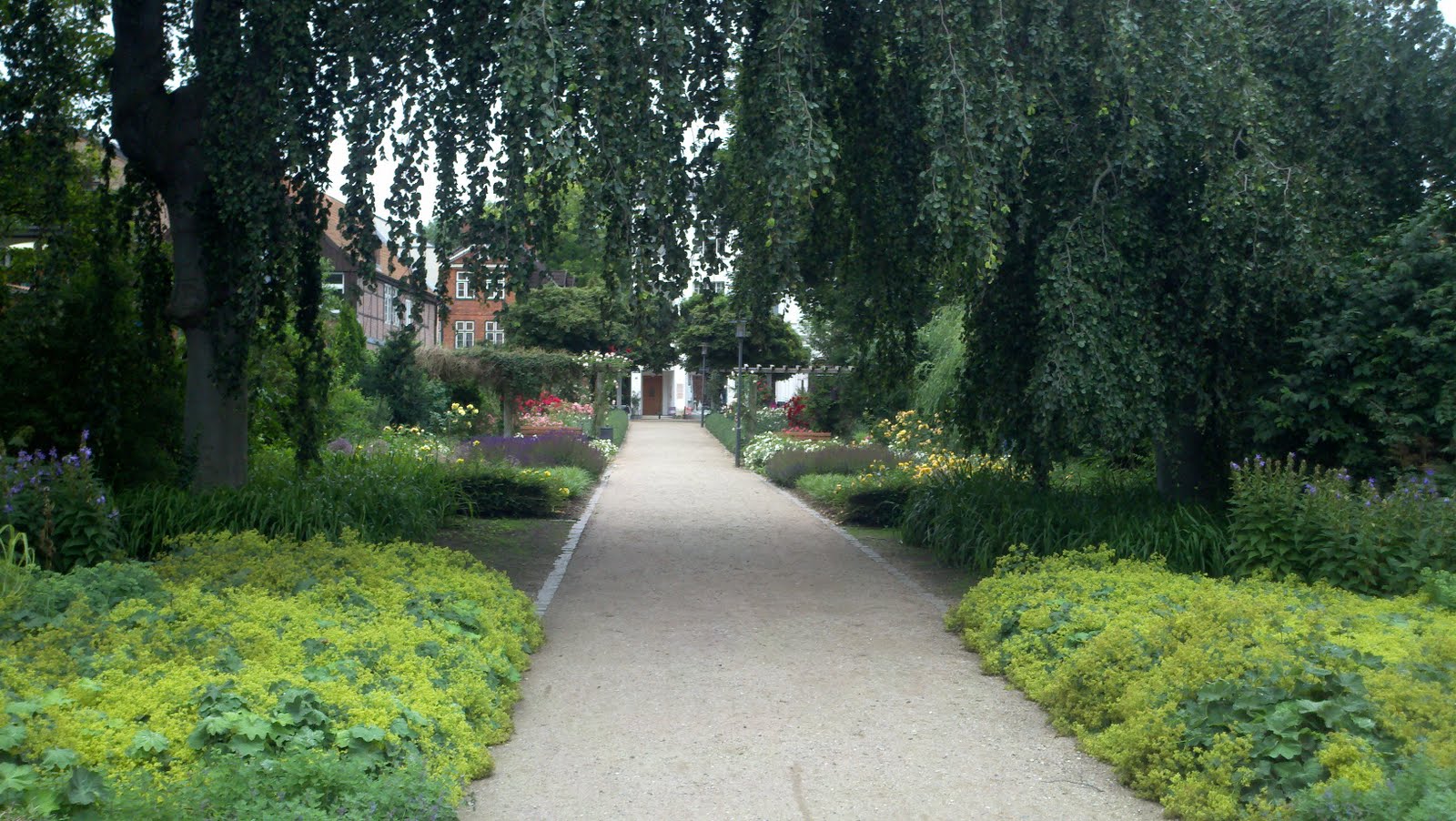 One of the many gardens in Eutin
 The Eutin Marktplatz
We've had a number of successful performances of both Don Giovanni and Hänsel und Gretel now, and have gotten mostly positive reviews in the papers, which is fairly encouraging. Tonight is the large chamber ensemble concert--a program I'm not involved in, but will include works such as Mozart Symphony No. 21, Barber's Adagio for Strings, and Copland's Fanfare for the Common Man. I'll post more pictures soon--anyone who is connected to me on Facebook or Google+ will be able to see all of the photos I've taken, but I will only post a select few here!
Saturday, July 16, 2011
Germany Post!
Well, so much for keeping everyone informed! Yes, I'm here in Deutschland, but like most rural towns in the beautiful countryside, Eutin is perhaps not the most equipped location for internet access. Therefore, my posts will be sparse (and unfortunately, without pictures), but I'll try to cover as much as I can!
Things in Eutin got busy from the very beginning. We all stumbled through the airport and to our residence extremely jet-lagged. Us musicians are being housed at two different locations (located next to one-another), the Bethesdahaus and the See Schloss hotel. A few of us (including myself) had a brief jazz concert to play that evening, at a party celebrating our arrival. Everyone was in a tired daze, but we were all excited to be there.
The Fourth of July had it's own excitement as well--the town of Eutin decided to throw an American Independence Day party in the town square for us, where the jazz sextet I was in also played. It was around this point I learned that the folks here really know how to throw a party.
Our first concert was a week ago Friday. The orchestra played a number of works, including Cappricio Espagnol by Nikolai Rimsky-Korsakov, American in Paris by George Gershwin, multiple works by Carl Maria von Weber (who lived in Eutin), and other works by composers such as von Suppe, and Mozart. This concert brought to light the integral role of the barn in the life of a musician in Eutin; all of our rehearsals were conducted in a barn that had been converted into a rehearsal space, while the concert was performed in a separate, completely unconverted barn. I will be sure to post pictures in a separate post and link them to the appropriate articles once I have a faster connection.
From there we went straight into rehearsal for Don Giovanni in the stage itself. I'm aware my description couldn't do this location justice, but it will suffice to say that it is the first time I've ever played in an outdoor amphitheater from an open-air pit. Unfortunately, I didn't get to see that much of the staging and costumes from the pit, but what I have seen thus far is certainly remarkable. Our first performance was last night, and a massive cast party ensued. Like I said, these folks really know how to have a party.
I've been in love with the German life since coming here. The food and drink (especially the drink) is absolutely delicious. The town of Eutin is beautiful; in this place, gardens transform into streets which lead you to forests and meadows. Nature has imposed itself on this town, and the people have responded by completely embracing it.
I was able to make a day trip to Lübeck, which should be a separate posting in itself. It's a beautiful city, and not terribly hard to get to from Eutin. The highlight of my trip was visiting the Marienkirche. Knowing I was in a room where Buxtehuda performed regularly, and where composers such as J.S. Bach and Handel had visited left me with this chilling feeling of legacy. I believe visiting places like the Marienkirche is essential to any young, learning musician. Music history can feel like a myth when all you know about it comes from what you learn sitting in a classroom hundreds of miles away. But when you're breathing the very air in which that myth was written, those stories become very real.
As I mentioned earlier, I will make a separate posting just for pictures of the places here once I'm on a more reasonable internet connection. I'll do my best to keep this updated. Until then, bis bald!
Friday, July 1, 2011
Germany
Well, its been a while since I've updated this blog. A lot has happened since my last post, of course, but I would like to start fresh with this one because:
I am on my way to Germany with the Kansas University Symphony Orchestra!
This year marks the first year of the Kansas University German-American Music Institute (or KUGAMI for short). We've teamed up with Lawrence's sister city, Eutin, to perform in the Neue Eutiner Festspiele, an annual opera festival held in Eutin to honor Carl Maria von Weber, who is an Eutiner himself. I'll be posting more as the festival continues, and hopefully from my computer (and not my phone, which I'm posting from now). Auf wiedersehen!

Tuesday, January 11, 2011
YouTube Symphony Orchestra results
Well, I'm down in Baltimore now, practicing and getting ready for my trip to MAGFest. While I was down here, I received the results to the YouTube Symphony Orchestra auditions.
Unfortunately, I wasn't selected.
A full list of winners is available at the YouTube Symphony Orchestra's YouTube page.
As for me? Well, I cooked up a little video of my own to, well, cope with the results. I had a lot of fun with it, hopefully you'll enjoy it as much as I enjoyed making it :)
Wednesday, December 15, 2010
Final YouTube Spamwich
Well, today and tomorrow are the last days you can vote. If you spare a second, please vote! You can vote once a day. Thanks to all who have supported me! I hope I make it!
Link to vote: http://goo.gl/w8c0f
:)
Friday, December 10, 2010
Sitting in a chair, in the sky
Well, the semester has finally come to a close. Concerts are all played, projects all turned in, finals taken, and jury performed. And now I'm on a plane: sitting in a chair, in the sky, on the internet. Technology is awesome. I'll be landing in Baltimore at around 9 PM tonight, and immediately start rehearsing with Medicine Lake for our CD release show tomorrow! Don't forget: 7:00, Recher Theater, Towson, Maryland. Tickets are $10, and we'll have CDs, T-shirts, and other merchandise at the show!
While I'm indulging in such shameless self promotion, I might as well also mention that I was recently selected as a finalist for the YouTube Symphony Orchestra! The audition this year included an improvisation portion--two improvised solo sections were built into the piece (Mothership by Mason Bates), and YouTube offered an audition for these sections open to all instrumentalists. I auditioned for the rhythmic improvisation section on vibraphone, and was selected as one of seventeen finalists! If you can spare the time, I would greatly appreciate your vote: you can cast your vote by clicking here.
I learned a whole lot this semester, but probably the most important thing I learned was that no matter how busy you get, it's possible. This semester was unlike anything I've ever dealt with before, and you better believe that I complained about it all the time. I'm sure Ji Hye (my teacher at KU) was sick of hearing about how busy I was by the end of the semester. Sorry for whining so much.
I had to make some choices in order to make it work, and perhaps the most frustrating of them was the balance between homework and practicing. Now, at this point, understand that doing things for fun was out of the question. I gave myself Friday and Saturday evenings (pretty late) as time to not do homework or practice so that I wouldn't lose my mind. Other than that, I felt bad for my blossoming video game collection, and the nice TV and sound system that my old roommate gave me. I barely touched any of them.
In a normal day, I could generally find time to practice at least 2 hours a day minimum--which would always happen from the hours of 8am to 10am , before my first classes. After this, I was generally able to find another hour or two throughout the day to practice, but my constantly shifting rehearsal, teaching, and concert schedule proved to make finding consistent hours difficult. I had to do the best I could.
However, my classes had a great deal of work attached to them as well. Each meeting had some sort of reading assignment attached to it, I had frequent writing assignments, and the final projects were quite large and involved a great deal of preparation. Thankfully I didn't have very many tests to worry about in either class, but when I did there was a fair amount of studying involved.
It was the midterm for my renaissance music history class that made me begin thinking about this a lot. I began studying for that midterm about, say, a week before the test. The day or two immediately preceding the exam, I spent almost all of my "free" time (which included practice hours) to studying for this midterm. I even cancelled my lesson for the week in order to prepare.
I got a perfect score on the midterm. 100%. All of that studying paid off. Except... I could have practiced and probably pulled off a B.
Don't get me wrong, I was ecstatic to see my score. Being at Peabody taught me how hard I need to work in order to make it in this industry, and I've certainly learned how to apply that to my academic studies. Learning about the history of music is hugely important to a music student. But, at the same time, I'm a percussionist. While it's great to know where the orchestra repertoire I study evolved from, I will rarely ever have to deal with renaissance music in my percussive career. Maybe if I transcribed a motet for marimba, sure... but since when was I going to be playing solo marimba renaissance transcriptions? Doesn't seem very likely.
So was it worth it to cancel my lesson and stop practicing so that I could get an A+ on my renaissance midterm? You tell me, I'd certainly be interested to open this question for discussion. The solution that I came up with was this:
I drove halfway across the country to study percussion with Ji Hye Jung. Not to be a musicologist.
I always thought the quote "don't let school get in the way of your education" was funny, but now it's hitting pretty close to home. I will still strive to get the best grades I can get in my academic coursework--but for now on, never again at the expense of my instrumental studies.
Wednesday, October 20, 2010
Shifty
Well, I've been long overdue to make a post in this thing. A lot has happened, so I apologize. Here we go:
Summer
I spent the summer living in Baltimore, working at RadioShack, practicing, and getting ready for my grad school adventure in Kansas. I spent most of July working at a rock day camp called "DayJams", where I taught keyboards and coached bands comprised of 8-15 year olds. It was certainly exhausting, but still a wonderful experience. In addition to these things, I spent a great deal of time performing with my band, Medicine Lake. We're currently in the process of finishing an EP, which will be released at the Recher Theater in Towson, MD on December 11! Go see us!
The day I moved out of Baltimore, my car was broken into and my laptop, sound card, external hard drive, wireless keyboard/mouse, Wacom tablet, Seinheisser headphones, laptop mount/usb hub, and 8gb microSD card were stolen. Silly me for putting them all in the same backpack. My dad's backpack was also stolen, he lost a pair of prescription glasses and some books. Who was I to think I could live in Baltimore without sustaining some sort of loss!
Kansas
Anyway, I live in Lawrence, Kansas now. I'm a grad student at Kansas University, studying percussion with Ji Hye Jung and working for both her and Dan Gailey (head of the jazz department) as a graduate teaching assistant. In addition to my own homework and practicing, my responsibilities include teaching private students, a percussion methods class, coaching a few jazz combos, and general clerical work. It is also exhausting--much more so than teaching 8-15 year olds how to play rock music. However, I do believe the rewards of this experience will far exceed the rewards of teaching at DayJams.
Lawrence is a really beautiful place. It's this weird isolated sort of oasis in the middle of Kansas... it seems to have everything. You get a street like Mass St. where the night life happens--bars, clubs, restaurants... people are always out. Then, you head to the opposite side of town and find yourself in complete suburban paradise--the type of place I would want to raise a kid. Head south and you're immersed in absolute commercial overload--Best Buy, WalMart, Target, Bed Bath and Beyond, car dealers... pretty much everything. Of course, in the middle of all of this is Kansas University itself. Thanks to all the variety, Lawrence seems to be a really interesting cultural mix. You get plenty of liberal wierdos akin to what I lived with in Baltimore... but at the same time, plenty of the more grounded, conservative middle class that I'm so used to from living in West Hartford.
I really do enjoy studying at KU, despite how busy things are. Ji Hye is basically two people to me. During the day, she's 100% my teacher (and boss)--I get nervous for lessons, she kicks my ass and I really feel like I have to work hard for her if I want to be successful. Yet, we'll all go out somewhere and suddenly she's the same Ji Hye I was friends with at Peabody. It's really nice to have both Ji Hyes here, especially considering I basically up and left everything I had become familiar with to move out here to Kansas. If nothing else, it's one thread of consistency I have to hold on to. In fact, considering the theft of pretty much my entire electronic identity, it's one of the only.
Classwork is pretty demanding. They take musicology pretty seriously here, and it's really hard to keep up. I came to the frustrating realization here that I really don't have time enough to do as well in everything I'm responsible for as I am possibly capable of. If I want to excel in one discipline, something else is going to have to give. In other words: if I have to chose between necessary homework or necessary practicing, I have to chose practicing. Earlier in the semester, I didn't practice for about two days just to study for a midterm--which I aced. But I could've practiced and gotten a B+ on it. Hmm.
Medicine Lake
Yet, through all of the changes, one thing I'm still trying to hold on to is my participation with my band, Medicine Lake. Looking back at my previous entries, I don't think I've written much about them. Here's what's up:

Medicine Lake basically started over the summer for me, even though I had been rehearsing with them sporadicly throughout the school year. It wasn't until the summer we had our first big show, which was opening for another band at the Recher Theater in Towson.
I play keyboards and percussion for these guys--namely vibes, marimba, and malletkat (which for our live engagements generally plays the role of marimba), and sing back-up vocals. I've always wanted to be a rock star to some degree, and it's nice to really make that dream become a reality (to some degree). I also feel like it's a step closer to bridging the gap between the stigmas of classical music and rock music. It's not every day you hear vibes and marimba in a rock band, and the only reason I can do that is because I went to school for classical music. I just hope it's an idea that catches on to more people. As much as I love playing with them, it does make me realize how much music there is out there that I want to make. Playing jazz, playing in an orchestra, playing chamber music... I just hope I have opportunities in these worlds like I do with Medicine Lake.
We spent most of the summer recording an EP, and are going to be releasing it at a show on December 11 (also at the Recher Theater in Towson!). I've sacrificed both my fall and Thanksgiving breaks (as well as a great deal of money) to fly back to Baltimore just to rehearse with these guys. If you're in the Baltimore area then, come see us perform! The show starts at 7, tickets are $10 each (+3 at the door if you're under 21). If you can't make it, it's okay--that's why we're releasing the EP! I don't know how much we're charging for it yet, but it won't be that much. Let me know if you want to purchase either thing! I will hook you up!
PASIC
A few weeks ago, a bunch of us drove through the night from Lawrence to Indianapolis to go to the Percussive Arts Society International Convention, aka PASIC. It was an overwhelmingly positive experience. Ji Hye was playing there, along with a doctoral percussion student at KU named Cory Hills. However, Peabody won the chamber music competition last year, so they were playing as well! Peabody ended up playing Threads, and (you guessed it,) Village Burial. It was great getting to support all my friends who were playing.
In addition to catching up with old friends (as well as making some new ones), I had the opportunity to play in a snare drum clinic with Joe Petrasek, one of the percussionists in the Kansas City Symphony Orchestra. Miguel, the other teaching assistant for Ji Hye, played too, as did two other people I hadn't met before. I ended up playing Scheherazade (third movement) and Shostakovitch 10 (second movement), while Miguel played the fourth movement of Scheherazade. There were many more people than I originally anticipated, which was a little unnerving, but it was a great experience overall. I hope that next time I go, I can play in more workshops like this one!
Thanksgiving
And here I am, back in Baltimore, spending Thanksgiving break getting ready for a show with Medicine Lake on Saturday. My family actually came here to celebrate Thanksgiving! We all ended up at my aunt's house, and by some fantastic coincidence, all of my mom's side of the family ended up there. It was great to be with everyone again, we very seldom have gatherings like that. This was also the first time I've seen my mom or sister since June, so getting to see them again is really nice. I have a lot of work left to do before this semester is done, and ended up spending a lot of my time here frantically trying to finish a 15-page research paper for my bibliography class that's due on Wednesday. Thankfully it's about video game music, so at least I get to enjoy working on it. Once that's done, I have a writing assignment and a transcription project to turn in for my renaissance music history class, a jury to play, and then a plane to catch back to Baltimore!
I don't know about you all, but I'm full of food. Hope you all have had a happy Thanksgiving (those of you who celebrate it)! Hopefully my next update will be quite a bit shorter--and sooner--than this one!
Friday, July 2, 2010
Improvisation
Anyway, there's not much I can really say about learning this piece, simply because I didn't learn it. I guess I learned how to do it, but that skill wasn't learned at Peabody. I began improvising when I was really young--I think 4th grade was probably about when I started improvising, which is funny because that's also when I started studying percussion. However, I had a basic piano book that my dad used when he tried (and failed) to teach me piano, and using the little I learned from that book, I "wrote" my first piece (which was about the kids at school making fun of me, but that's a longer blog entry). Once I started taking piano lessons, I would always mess around with improvising, but to me it was nothing special. I thought I was "writing" music, which I guess I was--they were short, simple pieces that existed only for as long as I played them. I had no idea what I was doing was the same process that was used in jazz.
I got my first vibraphone in 8th or 9th grade, I can't exactly remember when. It was an old, beat up JenCo that my dad and I split the cost of. I mostly used it so I could practice the little bit of marimba I was learning in my drum set lessons, and so I could prepare the mallet parts in regionals and all-state auditions. When my dad told me I should start playing jazz, that didn't really take me much further than learning the heads to pieces like A Night in Tunisia straight out of the Real Book. I remember going to the improv class that the high school kids taught when I was in middle school, and trying to play a vibraphone solo. It was really bad, and I felt overwhelmed. I figured jazz wasn't something I would ever be very good at--trying to play the right scale to every chord just confused me! To me, "making it up as I went along" was much easier than "improvising".
It wasn't until I was in high school, and I was playing aux percussion in the what we called "Jazz II", which was the entry level jazz band in the high school. Basically, I played drum set on one or two charts, and played bongos and congas and other auxiliary instruments behind the drummer. However, every once and a while I would get a vibe chart to read, so I would get to play that. Near the beginning of the year, we played a chart called "Cubasa", in which the solo section was basically in F minor the whole time. I decided that playing scales on one chord was way easier than lots of chords like the blues form accosted me with, so I went home and started messing around in F minor. Next time we played it in jazz band, I asked if I could try a vibraphone solo.
It was a pretty big shock to me, as a 13 year old kid, to see my director and the rest of the band shocked with my solo. Nobody had any idea I could improvise, including me. So when my director said "Doug, I didn't know you could improvise," my response was "neither did I."
Basically, from that point on I decided that I was going to be a jazz vibes player. I figured out how to play over more than one chord at a time, and even put together my own jazz combo. I called it the "Blue Streak Jazz Combo". We were pretty bad, but it was fun. As I got older, I climbed up the ranks in the jazz bands. By my senior year, I was playing drum set in the top jazz band.
So, why did I go to school for classical music?
I think, in the end, I just had way too big of an ego. I thought I could waltz into any more school, be the best (or only, as it was in high school) jazz vibes player there, and even do classical music on the side. Instead, I discovered that classical music was a highly demanding world of detail and precision, and making that my focus was way more challenging and beneficial to me as a musician than being the big fish in a small pond again. Despite all the bumps in the road on the way, I was right--studying music that I wasn't making up on the spot forced me to explore lots of other sounds, colors, ideas... and made my arms move really well in the process (after nearly breaking them). It was exactly what I needed, and I'm so glad I decided to do it.
I hoped, in this improvisation, to express the relief of being done with Peabody, and perhaps what it was like to be a student at Peabody. I don't know how successful I was, especially considering there were definitely "mistakes"--or rather, chords and sounds I wasn't expecting to hear. But regardless, I was really happy with the way this one came out. Getting to close my program with an improv was basically the biggest sigh of relief I could perform!
Friday, June 25, 2010
Omar I
Anyway, more on that later. The video I just posted tonight was probably the biggest musical challenge I had to face for this recital (or, at least tied with ...And Points North). Omar, by the late Franco Donatoni, is actually a collection of two pieces for solo vibraphone. I only learned the first of the two works--my classmate and colleague Candy Chiu (who is now studying up at Yale) played the second work on her recital last year, and it must have been equally hard (if not harder) than the one I played.
When I heard Candy's performance on the second work, I can't say I was that attracted to the piece. Nothing wrong with her performance, and I'm no person to critique the writing of Franco Donatoni--his music just isn't especially easy on the ears. When my teacher told me to start learning it, I had no idea what I would be getting myself into. Learning the notes to this piece was, much like ...And Points North, akin to learning another language. Where as most tonal (or rather, conventionally harmonized) music settles in my ear fairly quickly, I found myself on the same two measures of Omar after having had the music for a week. I had to really push myself hard, and force those notes into my brain. Even still, I was not able to commit the last two sections of the work to memory, and had to do the performance with the music in front of me.
As I spent time learning this music, the personality of the piece began to show. My teacher uses the word "schizophrenic" to describe this piece, and I wholeheartedly agree. In each section, it seemed like there were two different voices speaking at once--at times, almost as if they were arguing. This made me realize my role as the performer was even more challenging than simply trying to learn notes that didn't sit well in my head--I had to take this harsh, abrasive, and largely inaccessible music, and bring it to life by making the voices have their own characters, and personalities. I don't know if it made me like the music any more (it probably did, I'm an optimist), but it certainly gave me a whole new respect for the music.
In the end, yes, I wish I had it memorized. I've played the piece better than I performed it on my recital. But, given all of the circumstances involved, I'm pretty happy with how the performance went. Maybe someday soon, I'll be posting Omar II up here as well.
Saturday, May 22, 2010
And Legions Will Rise
I only really had a month--MAYBE a bit more--to put this piece together. Every piece on my program seemed to introduce a different challenge, and this one was "how well can you learn this under a close deadline". In fact, it was so close that I pretty much find this piece to blame for my relapse of tendinitis right before my recital. The marimba part, technically, is a beast. Well, the violin and clarinet parts certainly aren't any easier, but for me it really took a lot of muscle to play. It couldn't have been more than two weeks before showtime that we were playing through the whole piece for the first time.
That being said, I can't help but be just a little disappointed with this performance. I think I did the best I could, given the circumstances. I just wish those circumstances weren't there, and that I could've had, say, all year to prepare this, and not just a month. I also wish my hands were a little more marimba friendly--this piece has made me question the reality of my current marimba grip, and I'm still thinking of changing it from Stevens grip back to Burton grip, which is the grip I began on.
The piece is a really beautiful work, and I had a great experience working with Kate and Gleb and learning this piece. Kevin Puts, the composer, was actually sitting in the audience during my performance. Maybe I've set my standards too high when I was hoping my performance could be the best performance of his piece he's ever heard. I don't think I can shake that standard, though.
Thursday, May 6, 2010
...And Points North
This piece came into my life only because I happened to mention to Bob (my teacher) that I had always wanted to do a theater piece. He decided to throw me straight into that world by not only assigning me to learn the piece ...And Points North by Stuart Saunders Smith, but by also putting it into my recital. Doing a theater piece had always been an exciting idea for me--when I was in middle school, I loved participating in my school's theater program, and in high school I had a great time making stupid movies with my friends, such as this one.
No matter where my acting skill was before I began this project, I had no idea what was in store for me. Smith's compositional language can only best be described as "intuitive"--it's got an improvisatory feel to it, but it's very precisely written. Learning the notes was sort of like learning another language--except I had to be able to come up with a pretty convincing speech in that language pretty soon. I felt the same way about learning Franco Donatoni's Omar.
However, as I learned the notes, the piece began to make sense to me... maybe even become a little personal. I started to understand the story that I hoped to tell, which I couldn't begin to understand until after I had every single note learned. I also needed to acquire every "instrument" before I could do this, which was a feat in itself. I never thought finding an aluminum washtub or Christmas tree stand could be so difficult, and making the wind chimes was an absolute nightmare. I ended up using a bunch of one dollar bottles of Irish whiskey (which made for some nice parties), as well as a whole bunch of beads and decorative glassware I purchased from a nearby craft store, Beadazzled. I must have spent over two hundred dollars on this piece, at least.
Once again, it was all worth it in the end. I have to say, this piece was, for me, the most fun to perform. I got to do a lot of things I don't normally get to do when I perform, and it was nice to be more of an entertainer than a musician for a little bit. It's a very neat phenomenon when you half to walk around as much as I did, and even at one point into the audience. The stage goes wherever you go. It's a nice feeling.
Subscribe to:
Posts (Atom)