I guess doing this whole blog thing doesn't really work if all of my updates happen once every few months. Sorry 'bout that.
I could type for days and days about my adventures in Germany, as well as my adventures in school this semester. Things have finally drawn to a close now, and I'm typing this sitting in the Chicago Midway International Airport, one hour into my three-hour layover. I've done all the grading I can do away from an internet connection, so before I arrive home, I thought I would jot down some thoughts I've been wanting to share for a while.
In preparing for my recital next semester (as well as a number of other auditions and competitions I will be pursuing), my professor finally gave me the o.k. to take a stab at learning Joseph Schwatner's Velocities. For those of you not familiar with the world of advanced marimba repertoire, Velocities is a very popular piece that a lot of marimbists attempt to play. It is extremely difficult; it covers the entire range of the keyboard, features numerous rapid interval changes, requires for the performer to use both the head and the shaft of the mallet against the bars, and to top it all off: the piece is a moto perpetuo—the performer isn't allowed any breaks for the entirety of the work.
Normally, I'm not one for showy pieces—I'm certainly impressed when I see one played well, but I'm much more interested in the artistry and musicianship of a performer than his or her technical capacity. A lot of the repertoire that shows off technique normally doesn't suit my fancy particularly well, but Velocities is an exception. Schwatner's intervallic continuity is consistent and precise—resulting in lots of open sonorities that I've always been attracted to. The first time I had ever heard a really well done performance of Velocities, I fell in love.
My love for Velocities wasn't free from complication, however. My first experiences listening to velocities were during the beginning of my encounter with tendonitis—an encounter that would ultimately claim two years of my undergraduate experience. As I watched one of my classmates play Velocities in a studio class (and quite well, at that), I found myself thinking “wow, his arms must be killing him!” about halfway through his performance. It was then that I realized that, no, his arms didn't hurt, because he didn't have that problem. I did.
This was one of the first times that I began to question the reality of my career choice. What kind of a percussionist am I expecting to be if I can't even play my instrument for five minutes? I had to leave the studio class for a few minutes to regain my composure.
Well, as far as my experiences are concerned, that was a long time ago. As far as I'm concerned, I've made a full recovery. Or at least, enough of a recovery that I can be a functional percussionist again. I've made a lot of changes, both in my practicing and in my lifestyle, to facilitate my career goals. I've been fortunate enough to have found some great help along the way, but ultimately, I had to learn for myself how to fix my problems. And now, I've got the score to Velocities in my stick bag pocket, ready to devote this winter break to learning it. For me, Velocities is the final boss in my battle with tendonitis. If I can play this piece, I can play anything.
Now all of this isn't for me to lament my “eternal struggle” with repetitive stress injuries. Rather, it's to share what this journey has inspired me to do. In trying to overcome my injuries, I was presented with far more obstacles than solutions—ignorance, misinformation, and to a certain extent, even malpractice. I couldn't believe how little information was available to a musician—especially a percussionist—who was dealing with an RSI. I should stress that the information I needed wasn't along the lines of “stretch, take breaks, use heat/ice,” and the other suggestions I received ad infinitum from only somewhat-informed percussionists and medical practitioners. Though these folks had the best of intentions, their advice was too little and too late for someone in my position. What I needed was someone who was fully aware of what was going on in my arms, and what needed to be done to fix it.
Now, don't get me wrong—I'm not a doctor, or a physician, or a therapist, or a brain surgeon, or anything else it might sound like I'm claiming to be in my writing. However, I've learned through my own experiences what my problems were, what caused them, and how they can be fixed. The amount of literature available to percussionists who share my situation is remarkable limited. Therefore, I would like to try my hand at writing an article about the injuries percussionists can get, and what can be done to prevent and fix them.
Hey, look at that! This plane has wifi too. Looks like I'll be posting from a chair in the sky again. Anyway, for the next few blog entries, I'm going to write a couple sample portions of this potential article I would like to write. I also my accompany them with some video instruction as well. With enough detail work, perhaps I can generate enough content to provide a fairly comprehensive guide for percussionists to help cope with, treat and avoid injuries altogether. It will be tough to find time for this... I've got a lot of music to learn, and not a lot of time to learn it. But—I think I'm pretty fortunate to get to try learning Velocities this year, and I would be humbled to help ensure that all other percussionists could have that opportunity as well.

Friday, December 16, 2011

Wednesday, July 27, 2011
Photos
Well, the internet situation here has gotten better, and I'm currently uploading all of the photos I've taken thus far. I'll post a few highlights in this post:
 The Barn where we had our first performance
 The Bethesda Haus, our residence
 Shane Nickels, one of our percussionists
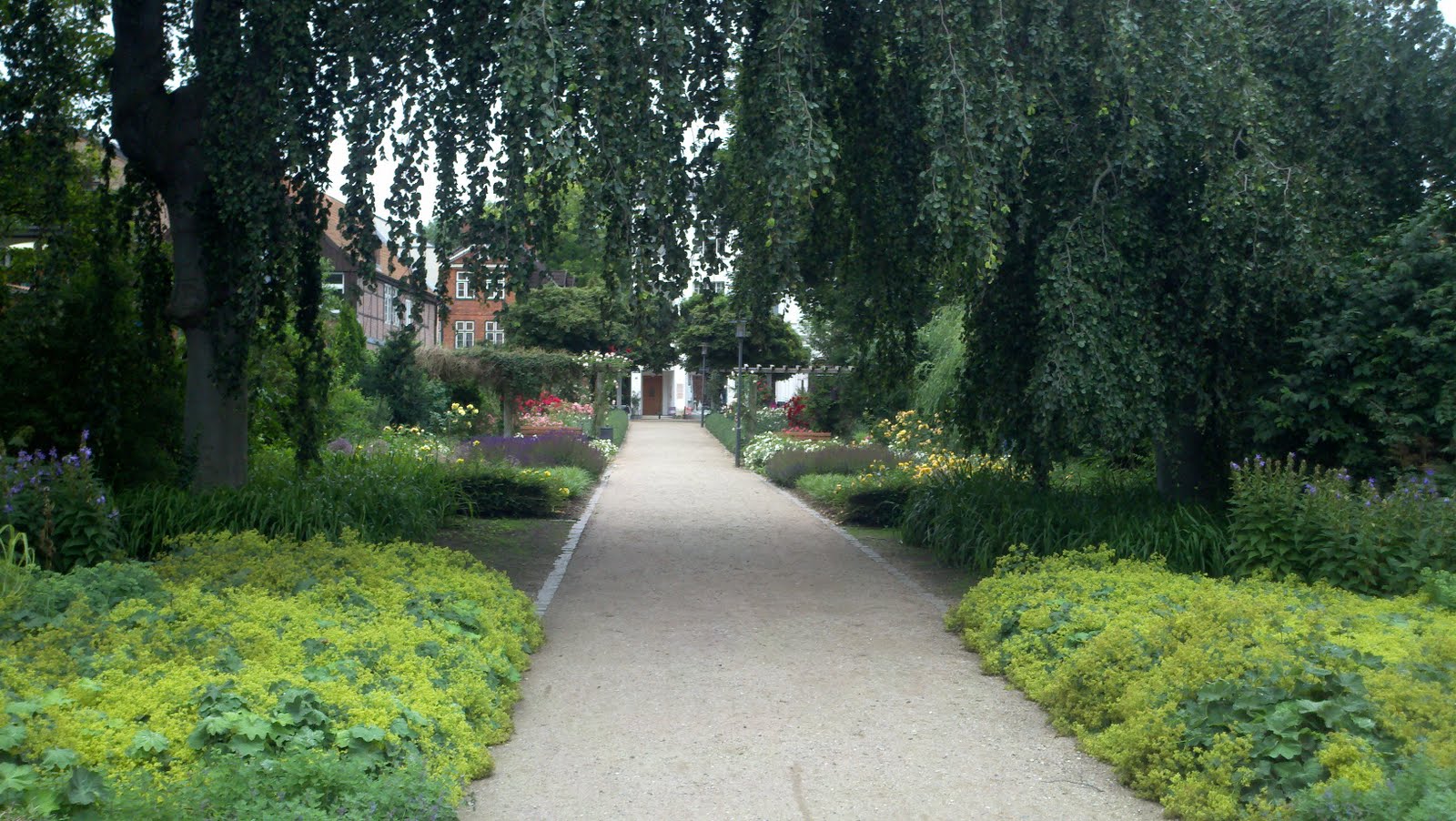 One of the many gardens in Eutin
 The Eutin Marktplatz
We've had a number of successful performances of both Don Giovanni and Hänsel und Gretel now, and have gotten mostly positive reviews in the papers, which is fairly encouraging. Tonight is the large chamber ensemble concert--a program I'm not involved in, but will include works such as Mozart Symphony No. 21, Barber's Adagio for Strings, and Copland's Fanfare for the Common Man. I'll post more pictures soon--anyone who is connected to me on Facebook or Google+ will be able to see all of the photos I've taken, but I will only post a select few here!
Saturday, July 16, 2011
Germany Post!
Well, so much for keeping everyone informed! Yes, I'm here in Deutschland, but like most rural towns in the beautiful countryside, Eutin is perhaps not the most equipped location for internet access. Therefore, my posts will be sparse (and unfortunately, without pictures), but I'll try to cover as much as I can!
Things in Eutin got busy from the very beginning. We all stumbled through the airport and to our residence extremely jet-lagged. Us musicians are being housed at two different locations (located next to one-another), the Bethesdahaus and the See Schloss hotel. A few of us (including myself) had a brief jazz concert to play that evening, at a party celebrating our arrival. Everyone was in a tired daze, but we were all excited to be there.
The Fourth of July had it's own excitement as well--the town of Eutin decided to throw an American Independence Day party in the town square for us, where the jazz sextet I was in also played. It was around this point I learned that the folks here really know how to throw a party.
Our first concert was a week ago Friday. The orchestra played a number of works, including Cappricio Espagnol by Nikolai Rimsky-Korsakov, American in Paris by George Gershwin, multiple works by Carl Maria von Weber (who lived in Eutin), and other works by composers such as von Suppe, and Mozart. This concert brought to light the integral role of the barn in the life of a musician in Eutin; all of our rehearsals were conducted in a barn that had been converted into a rehearsal space, while the concert was performed in a separate, completely unconverted barn. I will be sure to post pictures in a separate post and link them to the appropriate articles once I have a faster connection.
From there we went straight into rehearsal for Don Giovanni in the stage itself. I'm aware my description couldn't do this location justice, but it will suffice to say that it is the first time I've ever played in an outdoor amphitheater from an open-air pit. Unfortunately, I didn't get to see that much of the staging and costumes from the pit, but what I have seen thus far is certainly remarkable. Our first performance was last night, and a massive cast party ensued. Like I said, these folks really know how to have a party.
I've been in love with the German life since coming here. The food and drink (especially the drink) is absolutely delicious. The town of Eutin is beautiful; in this place, gardens transform into streets which lead you to forests and meadows. Nature has imposed itself on this town, and the people have responded by completely embracing it.
I was able to make a day trip to Lübeck, which should be a separate posting in itself. It's a beautiful city, and not terribly hard to get to from Eutin. The highlight of my trip was visiting the Marienkirche. Knowing I was in a room where Buxtehuda performed regularly, and where composers such as J.S. Bach and Handel had visited left me with this chilling feeling of legacy. I believe visiting places like the Marienkirche is essential to any young, learning musician. Music history can feel like a myth when all you know about it comes from what you learn sitting in a classroom hundreds of miles away. But when you're breathing the very air in which that myth was written, those stories become very real.
As I mentioned earlier, I will make a separate posting just for pictures of the places here once I'm on a more reasonable internet connection. I'll do my best to keep this updated. Until then, bis bald!
Friday, July 1, 2011
Germany
Well, its been a while since I've updated this blog. A lot has happened since my last post, of course, but I would like to start fresh with this one because:
I am on my way to Germany with the Kansas University Symphony Orchestra!
This year marks the first year of the Kansas University German-American Music Institute (or KUGAMI for short). We've teamed up with Lawrence's sister city, Eutin, to perform in the Neue Eutiner Festspiele, an annual opera festival held in Eutin to honor Carl Maria von Weber, who is an Eutiner himself. I'll be posting more as the festival continues, and hopefully from my computer (and not my phone, which I'm posting from now). Auf wiedersehen!

Tuesday, January 11, 2011
YouTube Symphony Orchestra results
Well, I'm down in Baltimore now, practicing and getting ready for my trip to MAGFest. While I was down here, I received the results to the YouTube Symphony Orchestra auditions.
Unfortunately, I wasn't selected.
A full list of winners is available at the YouTube Symphony Orchestra's YouTube page.
As for me? Well, I cooked up a little video of my own to, well, cope with the results. I had a lot of fun with it, hopefully you'll enjoy it as much as I enjoyed making it :)
Wednesday, December 15, 2010
Final YouTube Spamwich
Well, today and tomorrow are the last days you can vote. If you spare a second, please vote! You can vote once a day. Thanks to all who have supported me! I hope I make it!
Link to vote: http://goo.gl/w8c0f
:)
Friday, December 10, 2010
Sitting in a chair, in the sky
Well, the semester has finally come to a close. Concerts are all played, projects all turned in, finals taken, and jury performed. And now I'm on a plane: sitting in a chair, in the sky, on the internet. Technology is awesome. I'll be landing in Baltimore at around 9 PM tonight, and immediately start rehearsing with Medicine Lake for our CD release show tomorrow! Don't forget: 7:00, Recher Theater, Towson, Maryland. Tickets are $10, and we'll have CDs, T-shirts, and other merchandise at the show!
While I'm indulging in such shameless self promotion, I might as well also mention that I was recently selected as a finalist for the YouTube Symphony Orchestra! The audition this year included an improvisation portion--two improvised solo sections were built into the piece (Mothership by Mason Bates), and YouTube offered an audition for these sections open to all instrumentalists. I auditioned for the rhythmic improvisation section on vibraphone, and was selected as one of seventeen finalists! If you can spare the time, I would greatly appreciate your vote: you can cast your vote by clicking here.
I learned a whole lot this semester, but probably the most important thing I learned was that no matter how busy you get, it's possible. This semester was unlike anything I've ever dealt with before, and you better believe that I complained about it all the time. I'm sure Ji Hye (my teacher at KU) was sick of hearing about how busy I was by the end of the semester. Sorry for whining so much.
I had to make some choices in order to make it work, and perhaps the most frustrating of them was the balance between homework and practicing. Now, at this point, understand that doing things for fun was out of the question. I gave myself Friday and Saturday evenings (pretty late) as time to not do homework or practice so that I wouldn't lose my mind. Other than that, I felt bad for my blossoming video game collection, and the nice TV and sound system that my old roommate gave me. I barely touched any of them.
In a normal day, I could generally find time to practice at least 2 hours a day minimum--which would always happen from the hours of 8am to 10am , before my first classes. After this, I was generally able to find another hour or two throughout the day to practice, but my constantly shifting rehearsal, teaching, and concert schedule proved to make finding consistent hours difficult. I had to do the best I could.
However, my classes had a great deal of work attached to them as well. Each meeting had some sort of reading assignment attached to it, I had frequent writing assignments, and the final projects were quite large and involved a great deal of preparation. Thankfully I didn't have very many tests to worry about in either class, but when I did there was a fair amount of studying involved.
It was the midterm for my renaissance music history class that made me begin thinking about this a lot. I began studying for that midterm about, say, a week before the test. The day or two immediately preceding the exam, I spent almost all of my "free" time (which included practice hours) to studying for this midterm. I even cancelled my lesson for the week in order to prepare.
I got a perfect score on the midterm. 100%. All of that studying paid off. Except... I could have practiced and probably pulled off a B.
Don't get me wrong, I was ecstatic to see my score. Being at Peabody taught me how hard I need to work in order to make it in this industry, and I've certainly learned how to apply that to my academic studies. Learning about the history of music is hugely important to a music student. But, at the same time, I'm a percussionist. While it's great to know where the orchestra repertoire I study evolved from, I will rarely ever have to deal with renaissance music in my percussive career. Maybe if I transcribed a motet for marimba, sure... but since when was I going to be playing solo marimba renaissance transcriptions? Doesn't seem very likely.
So was it worth it to cancel my lesson and stop practicing so that I could get an A+ on my renaissance midterm? You tell me, I'd certainly be interested to open this question for discussion. The solution that I came up with was this:
I drove halfway across the country to study percussion with Ji Hye Jung. Not to be a musicologist.
I always thought the quote "don't let school get in the way of your education" was funny, but now it's hitting pretty close to home. I will still strive to get the best grades I can get in my academic coursework--but for now on, never again at the expense of my instrumental studies.
Subscribe to:
Posts (Atom)